Legal framework for community networks in Latin America
Experiences
Community network experiences are diverse and are present all over the world, both in remote communities and in urban areas. They use multiple technologies, such as WiFi, GSM, LTE or fiber. Their forms of organization are diverse, but they can be grouped into three main categories according to their form of organization and the legal regime under which they operate: 1) Self-provisioned networks, 2) networks that provide services to third parties and 3) mixed networks that incorporate both types of networks.
The examples presented here show the enormous capacity of community networks to provide affordable services in underserved areas and the diversity of countries that, through a flexible legal framework, facilitate their existence.
In this section you will also find organizations that support the creation of community networks either directly, through the accompaniment of these networks, through research or with funding.
Below you will find some examples of community networks, organizations that support the creation of such networks and important publications about them:
This type of network is made up of communities or organized groups that decide to share a telecommunications service through their own network; they have a non-profit purpose and build or share a common infrastructure.
This type of network is made up of communities or organized groups that decide to share a telecommunications service through their own network; they have a non-profit purpose and build or share a common infrastructure.
In these cases, the network constitutes a separate infrastructure from the services provided and has a different legal status from that of the service operator. The network becomes a separate entity that is not owned by the operator.
TIC A.C. is a civil association made up of indigenous and rural communities in Mexico and a technical team that supports individuals and communities seeking to build, manage and operate their own communication networks.
AlterMundi, through its Quintana Libre project (based in the Cordoba town of José de la Quintana), teaches small communities in Cordoba to build their own community digital networks. In this way they manage to bring Internet to where commercial providers do not reach, and also to give them the necessary tools for self-management.
Freifunk is a German initiative to support the development of mesh networking tools as well as to support communities seeking to create their own networks.
The U.S. Community Connect Program offers support to help finance the broadband deployment of communities in rural areas where it is not yet economically feasible for private sector providers to deliver service. Rural areas that do not have access to broadband speeds of at least 4 Mbps downstream and 1 Mbps upstream are eligible to apply.
Regarding the type of bands, the 900MHz and 5 to 6 GHz bands are available for unlicensed use. The 3550-3650 MHz band has a secondary and tertiary use allocation for dynamic access, since a Citizens Band Radio Service (CBRS) was adopted. Also, in 2002, a procedure was initiated to allow unlicensed TVWS devices to operate in secondary mode.
To encourage competition in the market, the U.S. government routinely awards bidding credits to small businesses, rural telephone companies, and minority- and women-owned businesses to participate in spectrum auctions. For instance, in the 2017 600 MHz Broadcast Incentive Auction, the U.S. Federal Communications Commission awarded 15% of bidding credit to rural service providers.
The agency also awarded bidding credits in the 600 MHz Broadcast Incentive Auction to telecommunications providers that will deploy facilities and provide service to tribal areas. This approach, designed to encourage carriers to provide access to affordable, quality service to those living in tribal areas, provides a useful model for awarding bidding credits to those seeking to deploy community networks.
The Kuhkenah Network (K-Net), operated and led by First Nations communities, is a unique provider of information and communication technologies (ICT), as well as telecommunications infrastructure and application support in a vast remote region of Northwestern Ontario, as well as other remote regions of Canada.
guifi-net is a citizen-driven technological, social and economic project that aims to create an open, free and neutral telecommunications network based on a commons model. Based in Catalonia, guifi-net seeks to facilitate access to telecommunications in general and to broadband Internet connection in particular, of quality, at a fair price and for everyone; as well as to generate a model of collaborative, sustainable and proximity economic activity.
FEDERATION OF ASSOCIATIVE INTERNET
INTERNET PROVIDERS FEDERATION (FFDN) France
In 2011, this Federation was created in France as a mechanism of unification of community networks in this country. The members of the FDN Federation are non-profit Internet service providers who share common values: voluntary, solidarity, democratic and non-profit work; Defense and promotion of net neutrality.
Honduras
In Honduras there is regulation for community purposes only in the Sound Broadcasting Service and Free Reception Television. Its legislation recognizes organized communities, commonwealths, councils and fraternities of indigenous, tribal, Afro-descendant and Garifuna peoples as groups that may apply for this type of license.
The bands 902-928 MHz, 2400-2483.5 MHz, 5150-5250 MHz, 5250-5350 MHz, 5470-5725 MHz and 5725-5850 MHz, among others, for both rural and urban areas, i.e. nationwide, are available for a General License (Free Use) for the operation of the Internet Service or Access to Computer Networks.
After the success of the Zenzeleni Mankosi cooperative, it was decided to name Zenzeleni Networks as a separate project, based on Zenzeleni Mankosi, to replicate its connectivity model in different parts of South Africa.
A civil association based in Argentina that works to promote a new paradigm based on freedom through peer-to-peer collaboration. AlterMundi explores different manifestations of this collaboration from a technological perspective and with an emphasis on community wireless networks in rural areas and small towns.
Through projects such as LibreMesh and LibreRouter, they contribute to a model based on accessible technologies that can be managed by people with no prior technological knowledge.
Rhizomatica is a civil association dedicated to increasing access to wireless communication and information and communication technologies, mainly in rural and indigenous populations.
Brazil
In 2012, Anatel, Brazil's telecommunications regulator, opened a bidding process for the 450 MHz frequency with the obligation to serve rural areas within a radius of up to 30 km from the limits of municipal headquarters. This was a specific radio frequency licensing action aimed at serving rural areas.
In 2017, Anatel approved new rules to facilitate the performance of small regional providers that use wired or restricted radiation means. Examples are the 2.4 GHz and 5.8 GHz bands, used by Wi-Fi systems. This is Resolution No. 680, dated June 27, 2017, which allows the provision of service without authorization or license, a registration on the regulator's website being sufficient.
It is currently developing two regulatory actions aimed at broadband expansion and the inclusion of small operators. The Structural Plan of Telecommunications Networks (PERT), aims to make a complete diagnosis of the current situation of telecommunications in the country, with a view to mapping the gaps in service and proposing projects for the coverage of these areas and the attention of the underserved population.
Similarly, the Small Providers Committee (CPP) aims to create a permanent forum for discussions on the needs of small providers and to assist them in the expansion of services, mainly broadband Internet access. In order to be considered a small provider, the new General Plan of Competition Goals (PGMC), in its fourth article, establishes that any group that has a participation of less than five percent in the market in which it operates is considered a small provider.
On the other hand, the evolution of the national fixed telephony market has stagnated over the years as mobile and VoIP services have become increasingly popular; the latter remain unregulated at the national level, which could be another entry point for community networks.
Currently, there are three pilot projects of community cellular telephony operated by the Federal University of Pará in the Amazon on an experimental basis. Finally, the Universalization Fund (FUST), in the current model, allows its use to serve rural and remote areas, but only through the fixed telephony service.
* Information on the conditions for small operators to have agility and simplicity in the processes of granting and contracting network elements in the wholesale market, as well as their main obligations and the possibility of participating in the Small Suppliers Committee are available at the following websiteAnatel's website.
ASSOCIATION FOR THE ADVANCEMENT
FOR THE ADVANCEMENT OF COMMUNICATIONS (APC)
The Association for Progressive Communications (APC) is a network and organization which promotes easy and low-cost access to a free Internet. One of its areas of work and research is community networks. Among its initiatives is the Global Information Society Watch (GISWatch), which is a collaborative research space to monitor national and international government initiatives to fulfill the inclusion of the information society.
His latest publication deals specifically with the topic of community networks:
The Internet Society (ISOC) is an organization that works for an open, globally connected, reliable and secure Internet for all people. One of its areas of work and research is community networks:
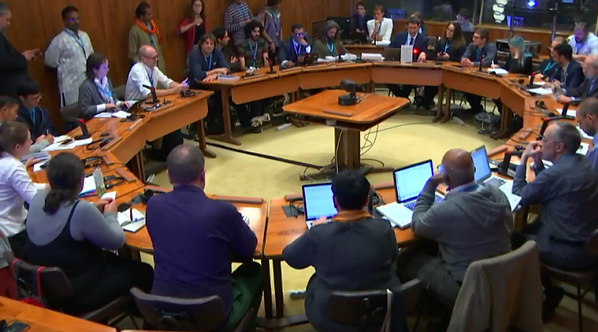
This dynamic coalition emerges at the 2017 Internet Governance Forum in Guadalajara, Mexico, where people from multiple sectors conduct a collaborative analysis on community networks.
This website celebrates the achievements of First Nations in rural and remote areas with respect to their First Mile networks in Canada. It focuses on three main projects: a) Research; b) Outreach; c) Public Policy.
netCommons is a Horizon2020 research project in the European Union, which follows a novel transdisciplinary methodology to treat network infrastructure as a common property, for resilience, sustainability, self-determination and social integration.















 English
  Español de México