Emergency Communications for Resilient Community Networks
Training site aimed at community networks, small operators and public policy decision makers who wish to understand and strengthen the work of community networks in emergency response.
Why is community media important in emergency response?
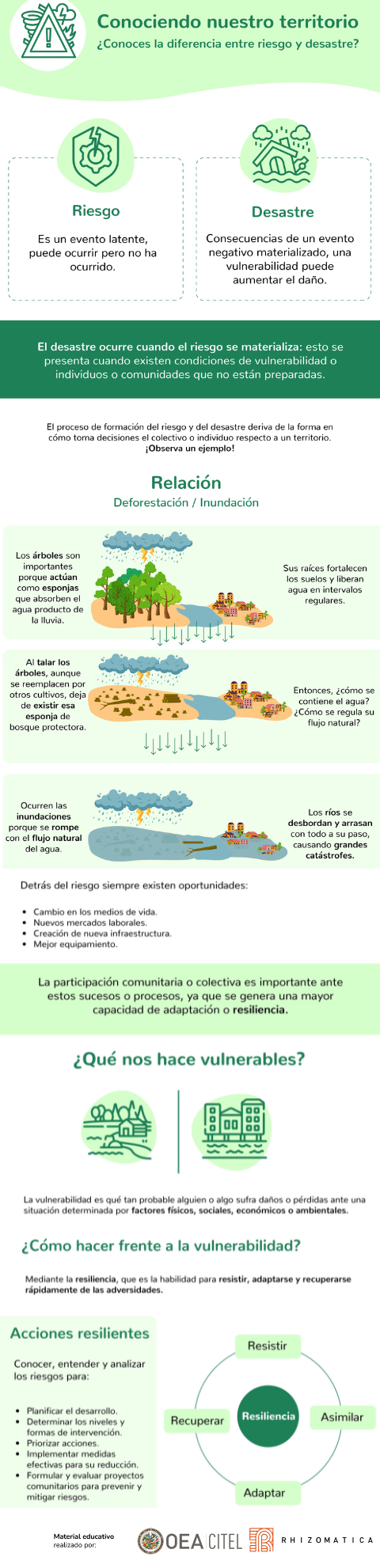
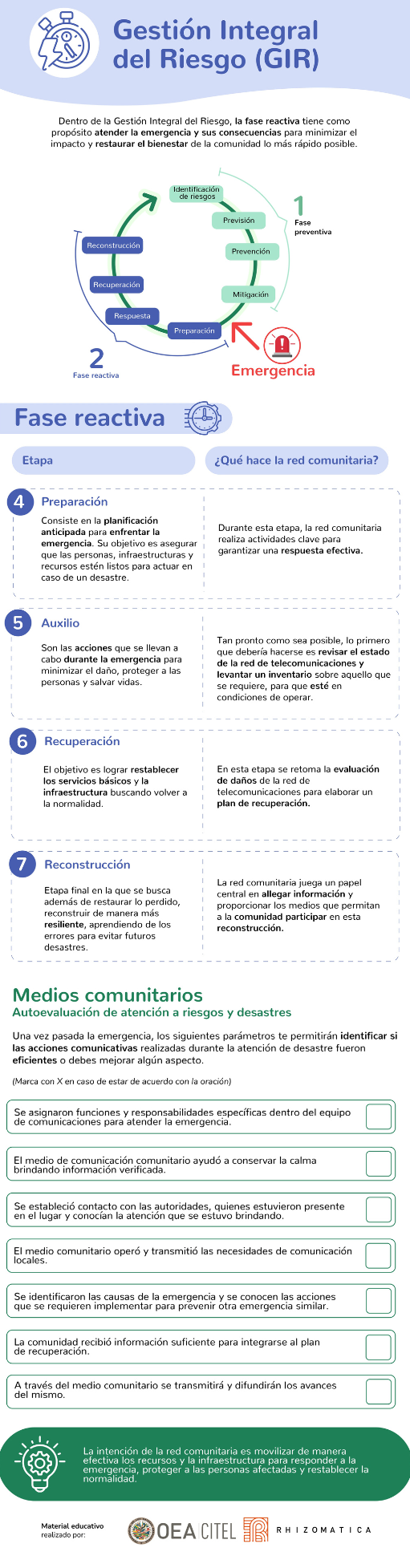
Communication plays a fundamental role in the care or management emergency response system, in fact, is the firstThe first element to reestablish in order to coordinate assistance. In emergency care, community media are involved in a transcendental way and it is important that they be trained to ensure effective management of the emergency in its different phases and to have resilient networks to quickly restore or maintain communication.
The importance of community media in these situations is key for several reasons. On the one hand, in many casesthese networks are the only means of communication or the most accessible ones.for the community in which they are located. On the other hand, they areorganizational spaces in which communities develop strategies for the development of theirnecessary to be able to face the different phases of the emergency.
The objective of this site is to make available basic materials for the preparation of community networks, and it is realized with the support of the Inter-American Telecommunications Commission (CITEL), Rhizomatica, and the ISOC Foundation through the Resiliency Grant Program.
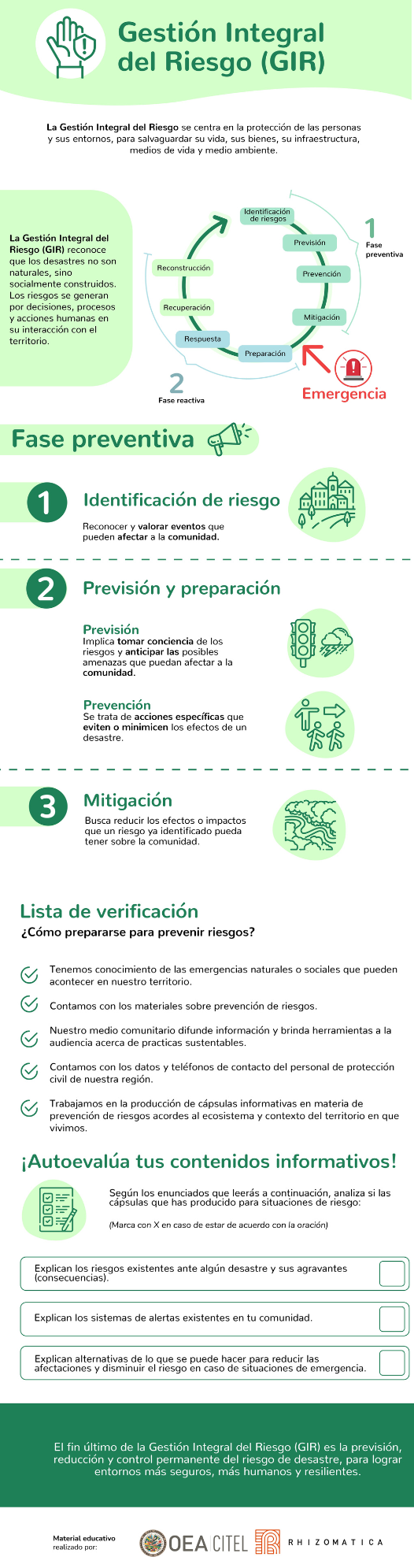
This is an opportunity to learn how to design strategies for risk management in rural areas, based on real experiences of community media that have dealt with emergencies in Latin America.
Emergency Communications for Resilient Community Networks Handbook
Download the guide here!
Emergency Communications for Resilient Community Networks Online Course
Course open! Register before February 17, 2026
The course we teach aims to develop an emergency communications plan for the community, based on the analysis of the diagnosis of the network and considering the particular conditions of the territory in which it is located. with the support of the Inter-American Telecommunications Commission (CITEL), Rhizomatica and the ISOC Foundation through the Resiliency Grant Program.
You will learn to design strategies for risk management in rural areas, based on real experiences of community media that have dealt with emergencies in Latin America.
The course is based on the study of three main units:




 English
  Español de México